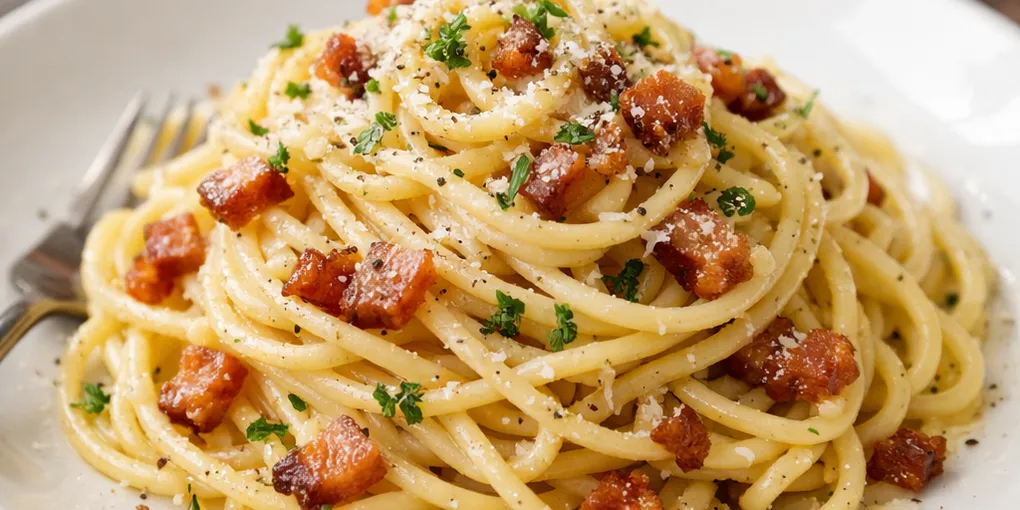
Classic Spaghetti Carbonara (Stovetop, Easy Weeknight)
Overview
Classic Spaghetti Carbonara is a simple, comforting Roman pasta that relies on technique and quality ingredients more than long cooking. This stovetop version yields a glossy, creamy sauce made from eggs and cheese emulsified with hot pasta water — no cream needed. Ready in about 25 minutes, it’s perfect for a weeknight meal that feels special.
Servings & Time
- Serves: 4
- Active time: 15 minutes
- Total time: 25 minutes
Ingredients
- 12 oz (340 g) spaghetti
- 6 oz (170 g) guanciale, cut into 1/3‑inch (8 mm) pieces
- or substitute pancetta if guanciale is unavailable
- 3 large eggs + 1 large egg yolk (total 4 eggs components)
- 1 cup (100 g) finely grated Pecorino Romano, plus extra for serving
- Freshly ground black pepper (about 1–2 tsp, to taste)
- Kosher salt, for pasta water
- Optional: a drizzle of extra‑virgin olive oil if guanciale is very lean
Equipment
- Large pot for pasta
- Large skillet (12‑inch) for guanciale
- Mixing bowl
- Tongs or pasta fork
- Ladle for reserving pasta water
- Microplane or fine grater
Step‑by‑Step Instructions
1. Bring salted water to a boil
Fill a large pot with water and bring to a rolling boil. Salt generously — about 1–1.5 tbsp kosher salt per 4–6 liters of water. The water should taste like the sea.
2. Cook the spaghetti
Add spaghetti and cook until very al dente — about 2 minutes less than the package directions. You want the pasta slightly underdone because it will finish cooking in the sauce.
3. Render the guanciale
While the pasta cooks, heat a large skillet over medium heat. Add the guanciale and cook, stirring occasionally, until the fat renders and the pieces are crisp and golden, 6–8 minutes. If the meat is very lean and the pan looks dry, add a teaspoon of olive oil. Reduce heat to low to keep warm.
4. Make the egg and cheese emulsion
In a bowl, whisk together the 3 whole eggs and 1 yolk with the grated Pecorino Romano until smooth. Add a generous amount of freshly ground black pepper and whisk to combine. The mixture should be thick and paste‑like.
5. Reserve pasta water and transfer pasta
Before draining, ladle and reserve 1–1½ cups of the starchy pasta water. Using tongs, transfer the spaghetti directly from the pot to the skillet with guanciale, letting some of the cooking water cling to the pasta — do not rinse.
6. Emulsify off the heat
Remove the skillet from direct heat. Wait 20–30 seconds to ensure the pan is not too hot (this prevents the eggs from scrambling). Pour the egg‑and‑cheese mixture over the pasta and toss vigorously with tongs, adding pasta water a little at a time to reach a silky, glossy sauce that clings to each strand. Use about ½–1 cup of reserved water; add more if needed. The starch in the water creates a creamy emulsion with the eggs and cheese.
7. Finish and serve
Stir in the crispy guanciale pieces and any rendered fat. Taste and adjust seasoning — you may not need additional salt because Pecorino and guanciale are salty. Divide among bowls, grind more black pepper over the top, and sprinkle extra grated Pecorino if desired. Serve immediately.
Tips & Troubleshooting
- If the sauce looks curdled or scrambled: Remove the pasta from heat and add a splash of hot pasta water, then toss vigorously. The water can help smooth the emulsion. If needed, transfer everything to a warm bowl and continue whisking.
- Too thick? Add more reserved pasta water, a tablespoon at a time, until you reach the desired silkiness.
- Too thin? Toss with a little more grated cheese off the heat to thicken.
- No guanciale? Pancetta is the next best choice. Avoid bacon if you can — it’s smokier and sweeter than the traditional cured pork.
- Cheese swap: Pecorino Romano is traditional — it’s salty, tangy, and firm. You can use a blend of Pecorino and Parmigiano‑Reggiano for a milder flavor.
Make‑Ahead & Storage
- Carbonara is best served immediately. If you must hold it, keep sauce and pasta separate and reheat gently. To reheat, warm the pasta in a skillet with a splash of pasta water and toss with a little extra grated cheese off heat to restore creaminess.
- Leftovers will keep in the fridge for up to 24 hours; texture will change and the sauce will set.
Variations
- Mushroom Carbonara: Add sautéed cremini or porcini mushrooms in the skillet after removing excess fat; fold into the pasta before adding eggs.
- Vegetarian (Carbonara‑style): Swap guanciale with smoked, thinly sliced king oyster mushrooms or pan‑fried smoked tofu for savory umami.
- Short pasta: Use rigatoni or bucatini for a heartier bite; cooking times will vary.
Final Notes
The secret to an authentic carbonara is timing and temperature: hot pasta, rendered fat, and eggs combined off the heat with starchy water produce a sauce that’s rich, silky, and clingy without cream. Keep the ingredients simple and focus on technique — the result is classic comfort in under 30 minutes.