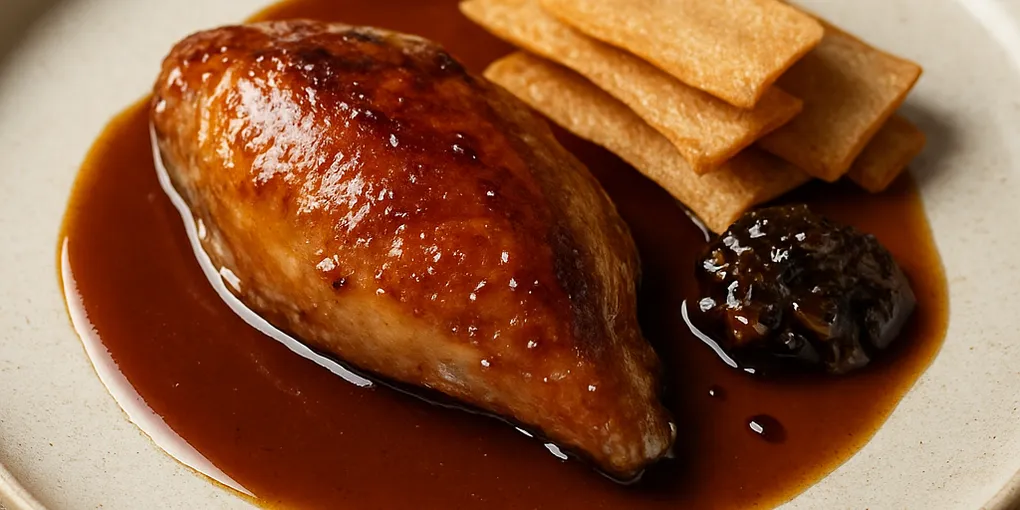
Pheasant à la Umami Candy — Bone‑Broth Crisps & Black‑Cardamom Caramel
Introduction
This is a modern, restaurant‑style main that hinges on a single secret twist: transforming intensely reduced bone broth into thin, brittle crisps that shatter on the plate and melt like umami candy on the tongue. The crisps deliver a concentrated, savory burst that elevates simple roasted game. Paired with a smoky‑sweet black‑cardamom caramel and bright pickled mustard pearls, the dish balances texture and flavor in a way you’ll only get in a Michelin‑star kitchen — but it’s surprisingly achievable at home.
Why this works (the secret twist)
- Bone‑broth crisps concentrate the savory collagen, roasted bones and aromatics into a crunchy, dissolving garnish — think of them as savory candy.
- The crisps’ immediate snap followed by a fast melt releases an intense, clean umami that amplifies the pheasant without masking it.
- Black‑cardamom caramel introduces smoky, resinous notes that echo the roast bones; a few seeded mustard pearls cut through with acidity and pop for contrast.
Equipment (special but simple)
- Wide sauté pan
- Small saucepan
- Baking sheet + silicone mat or parchment
- Oven or dehydrator (oven works fine)
- Fine mesh sieve
- Small pickling jar
- Thermometer (helpful for caramel)
- Blender or immersion blender (optional)
Ingredients — serves 4
For the pheasant
- 4 pheasant breasts, skin on, about 130–160 g each
- Kosher salt and freshly ground black pepper
- 2 tbsp neutral oil (grapeseed or sunflower)
- 2 tbsp unsalted butter
- 2 sprigs fresh thyme
For the bone‑broth crisps (secret element)
- 1.5 L high‑quality chicken or veal bone broth (homemade or store, very concentrated if possible)
- 2 tbsp soy sauce (for color and salt depth)
- 1 tbsp dark honey (helps caramelize)
- 1 tsp flaky sea salt
- 1–2 tsp lemon juice (to balance)
- 1 tsp powdered gelatin (optional — helps set if your reduction is loose; see method)
For black‑cardamom caramel
- 120 g granulated sugar
- 2 black cardamom pods, cracked
- 40 ml water
- 30 ml dry sherry or apple cider vinegar (for deglaze)
- 30 g unsalted butter, cold and cubed
- Pinch of flaky sea salt
For pickled mustard pearls
- 4 tbsp yellow mustard seeds
- 120 ml rice vinegar
- 40 ml water
- 1 tbsp sugar
- 1 tsp salt
For plating and vegetables
- 2 small heads of baby gem lettuce or 4 endive leaves, halved and charred
- 200 g roasted baby carrots or parsnips, halved lengthwise, brushed with oil and roasted
- Microgreens or thyme tips for garnish
Prep timeline (approx.)
- Pickled mustard seeds — 2–4 hours ahead (can be overnight)
- Bone‑broth crisps — start 3–5 hours before service (dehydration time varies 3–6 hours)
- Pheasant and caramel — finish at service, 20–30 minutes
Step‑by‑step
1. Make the pickled mustard pearls (easy, do first)
- Combine vinegar, water, sugar and salt in a small saucepan and warm until sugar dissolves. Cool to room temperature.
- Place mustard seeds in a jar, pour the pickling liquid over them, seal and refrigerate at least 2 hours — they’ll plump and pop slowly. Best if left overnight.
2. Reduce the broth to a glaze (start next)
- Pour bone broth into a wide saucepan and bring to a vigorous simmer. Reduce uncovered until it becomes glossy and syrupy — this can take 45–90 minutes depending on broth strength. You want about 200–250 ml of very concentrated glaze.
- Off the heat, whisk in soy sauce, honey, lemon juice and flaky salt. If the glaze is still too thin, sprinkle in powdered gelatin (whisk to incorporate) — the gelatin helps the final sheet hold together during dehydration but is optional if your reduction is thick.
- Strain through a fine mesh to remove solids. Taste: it should be intensely savory, slightly sweet and glossy.
3. Create the bone‑broth sheets and dehydrate
- Preheat oven to 70–90°C (160–195°F) — low and slow. (If you have a dehydrator, set to 55–65°C.)
- Line a baking tray with a silicone mat or parchment. Pour the broth glaze into a thin, even layer — 1–2 mm is ideal. Too thick = long drying; too thin = burns faster.
- Place in oven or dehydrator with door slightly ajar to allow moisture to escape. Dehydrate until the sheet is completely dry and brittle — this will take 3–6 hours depending on thickness and oven performance.
- Remove and allow to cool completely. The sheet should snap cleanly. Break into irregular shards and store in an airtight container at room temperature until plating.
Note: If the sheets come out tacky, return to low heat. If very brittle and shattery like glass, handle carefully.
4. Make the black‑cardamom caramel
- In a small, heavy saucepan, combine sugar and water. Gently warm until sugar dissolves, then increase heat without stirring until it turns an amber color.
- Add the cracked black cardamom pods and immediately deglaze with sherry or vinegar (careful — it will steam). Reduce briefly to a saucy glaze.
- Remove cardamom pods, swirl in cold butter to finish the caramel and season with a pinch of sea salt. Keep warm on the lowest heat.
5. Cook the pheasant
- Score the skin lightly in a crosshatch so it renders evenly. Season breasts liberally with salt and pepper.
- Heat a sauté pan over medium‑high with oil until hot. Place pheasant skin‑side down and press to ensure even contact. Cook until deeply golden and most fat is rendered, about 4–6 minutes.
- Flip, add butter and thyme, and basté while cooking the other side 2–4 minutes for medium‑rare to medium (internal temp 58–63°C / 136–145°F).
- Rest on a wire rack for 6–8 minutes.
6. Char the greens and finish vegetables
- Quickly char baby gem halves or endive cut‑side down on a hot grill pan or skillet until nicely blackened edges appear — this adds bitter balance.
- Reheat roasted carrots/parsnips if needed.
7. Plate and finish (the moment of truth)
- Spoon a smear of black‑cardamom caramel on the plate — a circular streak looks elegant.
- Place two pheasant breasts per plate over the caramel.
- Arrange charred greens and roasted roots beside the pheasant.
- Scatter 3–5 bone‑broth crisp shards on top of each breast — press one or two into the meat so they’ll shatter when cut.
- Spoon a few pickled mustard pearls around and finish with a few drops of olive oil and microgreens.
Serving notes and tips
- The bone‑broth crisps are fragile — add them at the very last moment so they retain their snap.
- Use a richly roasted, gelatinous bone broth for best results. Store‑bought broth can work but reduce longer to concentrate.
- If you prefer a vegetarian version of the crisp, reduce a miso‑enriched mushroom stock in the same way.
- Crisps make a fantastic finishing garnish for steak, roasted mushrooms or even winter root vegetable tarts — they’re a small luxury with big impact.
- Leftover crisps can be stored in an airtight container for 2–3 days but may lose some snap in humid climates.
Flavor profile summary
- Crisps: concentrated, meaty, instantly melting umami.
- Caramel: smoky, faintly floral black‑cardamom meets sweet butter.
- Mustard pearls: bright acidity and texture contrast.
- Pheasant: lean game with crisp skin and buttery finish.
Enjoy this dramatic, restaurant‑grade plate at home — the secret bone‑broth crisps are the kind of flourish that guests remember long after the meal is over.