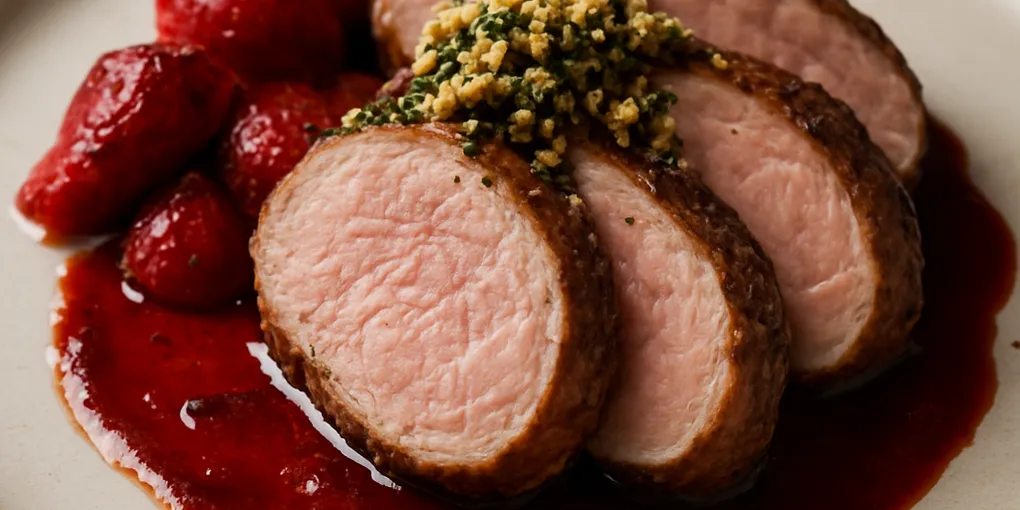
Juniper‑Smoked Pork Tenderloin with Smoked‑Strawberry Gastrique & Coffee‑Parmesan Gremolata
Overview
This is a restaurant‑level dish built around one secret twist: briefly cold‑smoking fresh strawberries to make a bright, smoky gastrique that sings with pork. Paired with a bold coffee‑Parmesan gremolata for crunch and umami, the result is an unexpected, deeply satisfying sweet‑smoky-savory plate.
This recipe uses a short miso‑maple brine to lift the pork’s juices and a quick cold‑smoke technique (you can do it on a stovetop or with a smoking gun). It’s theatrical but accessible — perfect for a dinner where you want guests to remember the flavor and the cleverness.
Why this works
- Smoked strawberries keep the fruit’s acidity and sweetness but add smoke compounds that echo the juniper‑and‑oak notes we pair with pork.
- The miso‑maple brine builds savory depth without long curing.
- Coffee in the gremolata contributes roasted bitterness that brightens the gastrique instead of overshadowing it.
- Finishing with a glossy, reduced pan sauce ties the whole plate together.
Ingredients
Serves 4
For the pork and brine
- 2 pork tenderloins (about 1–1.2 lb / 450–550 g total)
- 1 cup water
- 1/4 cup kosher salt
- 2 tbsp white miso
- 2 tbsp pure maple syrup
- 1 tbsp soy sauce
- 1 tsp whole black peppercorns, crushed lightly
- 2 garlic cloves, smashed
- 1 bay leaf
For the smoked strawberries (secret twist)
- 12 fresh strawberries, hulled (about 8–10 oz / 250–300 g)
- 1 handful juniper berries (lightly crushed) or 1 tsp juniper powder
- 1 tbsp brown sugar
- Wood chips for cold smoke: apple wood or cherry wood (or use a smoking gun)
For the smoked‑strawberry gastrique
- Smoked strawberries (from above)
- 1/3 cup white wine vinegar (or Champagne vinegar)
- 3 tbsp granulated sugar
- 1 tbsp unsalted butter
- Pinch of flaky salt
For the coffee‑Parmesan gremolata
- 2 tbsp finely chopped flat‑leaf parsley
- Zest of 1 lemon
- 2 tbsp finely grated aged Parmesan (Parmigiano‑Reggiano)
- 1 tsp instant espresso powder or very finely ground dark roast espresso (not brewed)
- 1 tsp extra‑virgin olive oil
- Freshly cracked black pepper
For pan sauce & finishing
- 1 tbsp neutral oil (grapeseed or canola)
- 2 tbsp unsalted butter, divided
- 1/4 cup dry white wine or dry vermouth
- 1/2 cup low‑sodium chicken stock
- 1 tsp Dijon mustard (optional)
- Flaky sea salt and black pepper to finish
Equipment notes (optional)
- Cold‑smoking setup: a smoking gun or a small wok/pot with a mesh rack and foil pan for wood chips.
- Instant thermometer for accurate pork doneness.
- Fine sieve for straining the gastrique.
Step‑by‑step
1. Quick miso‑maple brine (30 minutes)
- In a heatproof bowl, whisk 1 cup water with salt, miso, maple syrup, soy sauce until dissolved. Add peppercorns, garlic, and bay leaf.
- Submerge trimmed pork tenderloins in the brine for 20–30 minutes in the fridge. (This is a short brine — it seasons and adds umami without making the pork texture spongy.)
While the pork rests, prepare the strawberries.
2. Cold‑smoke the strawberries — the secret twist (10–15 minutes)
- Toss hulled strawberries with crushed juniper and brown sugar.
- Arrange strawberries on a wire rack. If using a smoking gun, place a glass bowl over the rack and fill with smoke for 30–45 seconds, then cover to trap smoke and let rest 5–8 minutes. If using a stovetop method: line a small pot with foil, place a tablespoon of wood chips in the bottom, heat until smoldering (low heat), place a rack above, set the strawberries on the rack, cover with a metal bowl or pot lid and allow smoke to collect for 4–6 minutes. The aim is a delicate smoky perfume, not an overpowering char.
- Taste one — you want bright strawberry, saltiness from the juniper sugar, and a whisper of smoke.
3. Make the smoked‑strawberry gastrique (15–20 minutes)
- Roughly chop half the smoked strawberries and reserve the rest for garnish.
- In a small saucepan, combine chopped smoked strawberries, vinegar, and sugar. Bring to a simmer and reduce gently until slightly syrupy — about 8–10 minutes.
- Pass through a fine sieve, pressing solids to extract flavor. Return the liquid to the pan, whisk in 1 tbsp butter for gloss, and finish with a small pinch of flaky salt. Keep warm on low.
4. Prep the gremolata (5 minutes)
- In a small bowl combine parsley, lemon zest, Parmesan, instant espresso powder, olive oil, and a few cracks of pepper. Mix and taste — the espresso should be a dry, aromatic counterpoint, not gritty. Adjust lemon or Parmesan if needed. Refrigerate until plating.
5. Sear and roast the pork (10–14 minutes)
- Pat pork dry; remove from brine and discard brine. Season lightly with pepper (do not over‑salt — pork has been brined).
- Preheat oven to 400°F / 200°C. Heat a heavy skillet over medium‑high with oil. Sear pork on all sides until deeply golden, about 2–3 minutes per side. Add 1 tbsp butter to the pan and baste the tenderloins for 30 seconds.
- Transfer skillet to oven and roast until internal temperature reads 125–128°F / 52–53°C for medium‑rare, about 6–8 minutes depending on thickness. For medium, target 135°F / 57°C. Rest the pork 8–10 minutes — it will climb a few degrees.
6. Make the pan sauce (5–7 minutes)
- Return the skillet to medium heat. Deglaze with white wine, scraping browned bits; reduce by half. Add chicken stock and the reserved smoked‑strawberry gastrique (start with 2–3 tbsp; add more to taste), and whisk in 1 tbsp butter and Dijon if using. Adjust seasoning. The sauce should be glossy with a balanced sweet‑tang and smoke.
7. Slice and plate
- Slice tenderloin into medallions. Spoon warm sauce onto plates. Arrange pork medallions over the sauce. Dot with whole or halved smoked strawberries you reserved. Sprinkle coffee‑Parmesan gremolata over the top for crunch and aromatic lift. Finish with a few juniper berries or microgreens if desired.
Timing & coordination
- Start with brine and smoking. While strawberries smoke, make the gastrique and gremolata. Brine time fits well with the other prep. Sear and roast the pork last so it rests while you finish the sauce and warm the gastrique.
Variations & notes
- If you don’t have a smoking gun: briefly charring the strawberries over a hot grill or using a few drops of smoked balsamic in the gastrique can approximate the profile.
- For a vegetarian alternate: smoke strawberries and make the gastrique the same, then pan‑sear halloumi steaks or thick slices of smoked tofu and finish with gremolata.
- Use instant espresso powder rather than used coffee grounds for a clean, food‑safe dry coffee flavor in the gremolata.
Make‑ahead
- Smoked strawberries and gremolata can be prepared 1 day ahead. Keep strawberries airtight in the fridge and gremolata chilled. Rewarm gastrique gently before plating.
Final plating tips
- Use streaks of sauce rather than puddles for a modern look. Place pork medallions slightly overlapping, scatter smoked‑strawberry halves, and finish with a small mound of gremolata for texture contrast. A few drops of good olive oil or a flake of Maldon sea salt on top will elevate the finish.
Tasting notes (what to expect)
First bite: the pork’s savory, silky interior. Midpalate: a bright rush of strawberry acidity with a subtle smoked perfume. Finish: roasted‑coffee bitterness from the gremolata and aged‑cheese umami — a surprising but harmonious trio.
Enjoy a dish that feels like an elegant dinner party centerpiece — the kind of recipe that uses one bold, unexpected trick (the smoked strawberries) to make everything else sing.