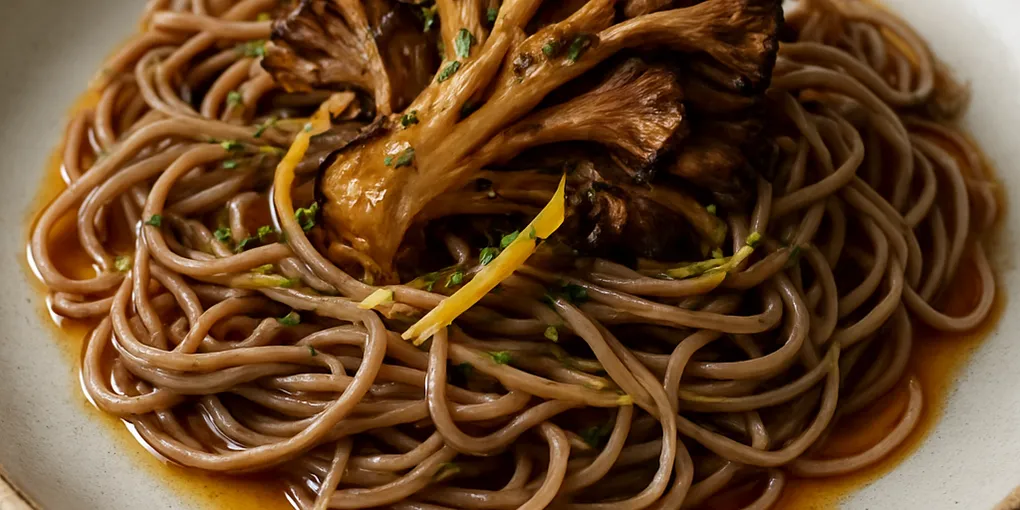
Maitake & Brown‑Butter Soba with Koji‑Fermented Meyer Lemon Essence
Introduction
This is a Michelin-style weeknight-worthy plate that hides a chef’s secret twist: a koji‑fermented Meyer lemon essence that turns citrus into an umami-rich, silky glaze. Paired with crispy torn maitake, nutty brown‑butter soba and toasted buckwheat crumble, the result is floral, funky, bright and deeply savory—like sunshine folded into miso.
The technique is approachable: a short koji fermentation (24–48 hours) concentrates and transforms lemon flavor, giving acidity a savory backbone. The rest of the dish amplifies that savory brightness: brown butter, kombu dashi, and toasted buckwheat add texture and depth.
Why this works (the secret twist)
- Koji transforms citrus: koji enzymes break down lemon proteins and pectins, releasing glutamates and mellowing sharpness into complex savory-fruitty notes. The finished liquid reduces beautifully into a glossy glaze that amplifies both mushroom and buckwheat flavors.
- Texture contrast: feather-light, seared maitake against dense, silky soba and crystalline buckwheat crunch keeps each bite exciting.
- Layered umami: kombu dashi + brown butter + koji lemon = savory complexity that reads like a single elegant flavor.
Ingredients (serves 4)
For the koji‑fermented Meyer lemon essence (secret twist)
- 3 Meyer lemons, zest removed with a microplane (reserve peel for another use)
- 150 g fresh koji rice (available at specialty shops) or 3 tbsp koji powder
- 100 g honey
- 1 tsp fine sea salt
- 120 ml cool filtered water
- 1 small strip kombu (5–6 cm), optional for later infusion
For the soba & main components
- 320 g 100% buckwheat soba (or 50/50 buckwheat/wheat)
- 2 large maitake mushrooms (about 400 g total), torn into fronds
- 80 g unsalted butter
- 2 tbsp neutral oil (grapeseed or canola)
- 2 small shallots, finely sliced
- 2 cloves garlic, thinly sliced
- 1 tbsp low-sodium soy sauce
- 250 ml kombu dashi (see note) or good-quality vegetable stock
- 50 g toasted buckwheat groats (kasha), toasted until aromatic
- 1 tbsp black sesame seeds, toasted
- 1 small bunch shiso leaves or parsley, sliced (for freshness)
- Fleur de sel and freshly cracked black pepper
Optional finishing
- 1 tsp yuzu kosho or grated fresh ginger (for heat)
- 1 tsp toasted sesame oil
- Microgreens or pea shoots
Note: Kombu dashi — steep 10 g kombu in 500 ml cold water for 30–60 minutes, bring to near-simmer, remove kombu. Reserve 250 ml.
Equipment
- Glass jar with lid (for koji lemon)
- Small saucepan
- Heavy skillet or cast‑iron pan
- Fine sieve or chinois
- Vacuum bag and chamber or ziplock + water displacement (optional for quick pickling)
- Microplane, tongs, thermometer (helpful)
Timeline
- Koji lemon fermentation: 24–48 hours (make ahead)
- Active cook time: 25–35 minutes
Step‑by‑step
1) Make the koji‑fermented Meyer lemon essence (secret twist)
- In a sterilized jar, combine the Meyer lemon zest, koji rice (or kojipowder), honey, salt and water. Stir to incorporate. Press the mixture down so the zest is submerged.
- Cover with a breathable lid (or a loose lid) and leave at room temperature, ideally 20–24°C, for 24–48 hours. You’ll see gentle bubbling and a soft floral aroma—this is enzymatic activity, not spoilage.
- After fermentation, strain the liquid through a fine sieve into a small saucepan. Press the solids to extract liquid. Add the kombu strip if using.
- Gently simmer the liquid until reduced to about 1/3 volume, until glossy and slightly syrupy — about 8–12 minutes. Remove kombu, cool. Taste: it should be bright but rounded, with a savory depth. Keep refrigerated up to 5 days.
2) Toast the buckwheat (kasha)
- In a dry skillet over medium heat, toast the buckwheat groats until golden and aromatic, 3–5 minutes. Shake frequently to avoid burning. Transfer to a bowl.
3) Prep the maitake
- Tear the maitake into bite‑size fronds; do not chop—tearing yields crisp edges and tender interiors.
- Heat 1 tbsp oil in a heavy skillet over medium‑high until shimmering. Add maitake in a single layer, season lightly with salt. Let sear undisturbed for 2–3 minutes to develop dark lacy edges, then toss and finish for another 2–3 minutes until crisped. Transfer to a paper towel to drain.
4) Brown the butter and cook the soba
- In a medium skillet, melt the butter over medium heat. Add shallots and garlic, and cook until translucent and beginning to brown — watch carefully, then swirl until the butter smells nutty and the milk solids are toasty, about 4–6 minutes. Remove from heat. This brown butter will coat the soba.
- Cook soba per package directions in well‑salted water until al dente, 3–5 minutes. Reserve 120 ml pasta water, drain soba and return to pot.
- Toss hot soba with brown butter, a splash of kombu dashi (2–3 tbsp), 1 tbsp soy sauce, and a few tablespoons of the reserved pasta water to loosen. Taste and adjust salt.
5) Finish and assemble
- Rewarm some of the reduced koji‑Meyer lemon essence gently — it should be glaze‑like but pourable. If too thick, whisk in 1–2 tsp warm kombu dashi.
- In the serving pan or bowls, mound the brown‑butter soba. Nestle the crispy maitake atop the noodles. Spoon a few deliberate strokes of the koji‑lemon glaze across the mushrooms and around the plate.
- Scatter toasted kasha and black sesame for crunch, drizzle a few drops of toasted sesame oil if using, and finish with shiso/parsley and microgreens. Add fleur de sel and cracked pepper to taste.
Plating suggestions
- Use shallow bowls to keep the glaze visible. Create height by twirling soba with tongs. Place maitake slightly off‑center and sweep the koji‑lemon essence with the back of a spoon. Scatter buckwheat and seeds for contrast.
- For a restaurant touch: finish with a grating of cold‑smoked butter over the hot maitake or a whisper of citrus oil.
Variations & notes
- Vegan option: swap butter for olive oil or a browned coconut oil emulsion; replace kombu dashi with mushroom dashi. Koji lemon remains vegan.
- Make the koji lemon larger batch — it stores refrigerated 5–7 days and freezes well in ice‑cube trays for single‑serve glazes.
- If you can’t source koji, briefly macerate zest in honey and salt for 6–8 hours and reduce; flavor will be brighter and less savory but still lovely.
Storage
- Browned butter soba is best eaten immediately. Leftovers can be stored separately: soba in fridge for up to 24 hours; maitake stored airtight and reheated briefly in a hot pan to regain crispness. Koji‑lemon glaze refrigerated up to 5–7 days.
Flavor map (quick)
- Bright: Meyer lemon acidity transformed into savory-sweet glaze.
- Deep: brown butter + kombu dashi = rounded umami.
- Textural: crisp maitake fronds + silky noodles + toasted buckwheat crunch.
This recipe showcases a humble mushroom and soba in a new light by using koji fermentation to convert citrus into an umami‑forward finishing glaze. The result is simultaneously comforting and surprising—an elegant, chef‑level plate you can reproduce at home. Enjoy the little alchemy.