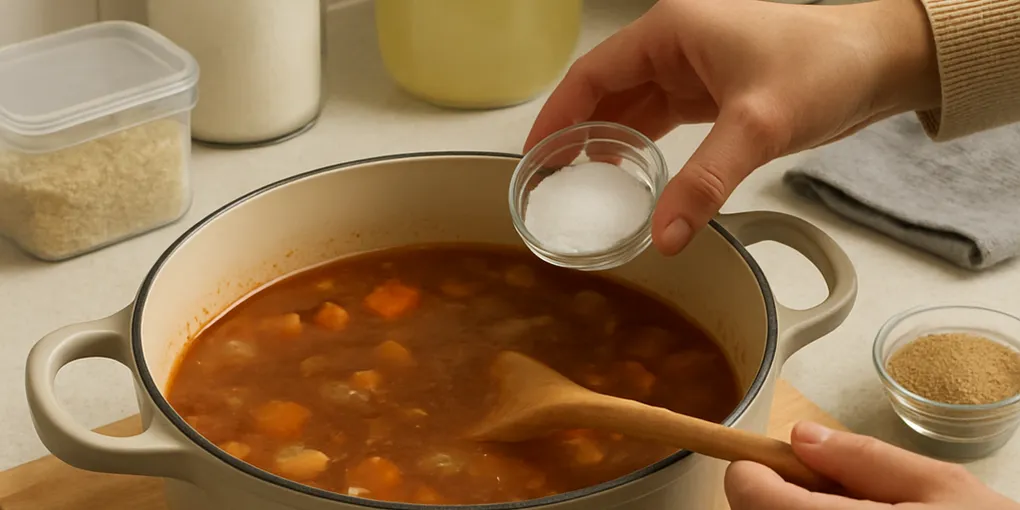
How to Instantly Fix an Over‑Salted Soup or Stew
The one-sentence hack
If your soup or stew is too salty, don’t panic — follow a prioritized sequence of fixes (potato absorption, dilution, acid, fat/dairy, and sweetness) and taste after each step until balance returns.
Why this works
- Saltiness is a perceived taste that can be reduced by physically removing salt (absorption), diluting it, or balancing it with other flavor dimensions: acid, fat, and a touch of sweetness.
- The method below gives fast, reversible options so you don’t over-correct.
What you’ll need (common pantry items)
- 1–2 medium potatoes (peeled)
- Unsalted broth or water
- Acid: vinegar or lemon juice
- Fat or dairy: cream, milk, coconut milk, or unsalted butter
- Sweetener: a pinch of sugar, honey, or grated carrot
- Strainer/ladle, knife, spoon, small bowl
Step-by-step rescue plan (try in this order)
1) Remove a portion and taste
- Ladle out 1 cup of the soup into a small bowl. This preserves a sample and helps prevent over-correction.
- Taste to confirm how badly salty it is and which balancing flavors the soup needs (acid, fat, or sweet).
2) The potato absorption trick — quick first attempt
- Peel a medium potato and cut it into large chunks.
- Add the potato chunks to the pot and simmer 10–15 minutes uncovered.
- Remove the potato pieces with a slotted spoon and discard (or mash separately if you want to reuse for non-salty mash).
- Taste the soup — the potato will have absorbed some surface salt.
Notes
- This removes only some salt; it is fast and won’t dilute flavor.
- If using rice or pasta to absorb salt, note they will expand and remain in the dish — use only if you plan to serve as-is.
3) Dilute strategically
- If potato didn’t do enough, add unsalted liquid — water, unsalted broth, or low-sodium stock — in 1/2 cup increments.
- Stir and taste after each addition until salt is acceptable.
Notes
- Dilution reduces intensity but also weakens other flavors. You may need to concentrate back later by simmering uncovered.
4) Balance with acid (for brightening)
- Add acid very slowly — start with 1/2 teaspoon lemon juice or vinegar per cup of soup.
- Stir and taste. Increase in small increments if needed.
Why it helps
- Acid distracts the palate and lifts flavors, making salt less dominant.
5) Add fat or dairy for roundness
- For creamy soups or stews, stir in a tablespoon of unsalted butter, 1–2 tablespoons of cream, or 1/4 cup coconut milk.
- Taste and adjust.
Why it helps
- Fat coats the tongue and mutes saltiness while improving mouthfeel.
6) Add a touch of sweetness if needed
- If the soup still tastes sharp, dissolve 1/4 teaspoon sugar or a teaspoon of honey in a spoonful of hot liquid and stir in.
- Taste and only add more in tiny increments — sweetness can quickly overpower.
7) Concentrate flavors if diluted too much
- If you’ve diluted to remove salt and the soup is now bland, simmer uncovered to reduce and concentrate flavors, stirring occasionally.
- Re-taste and fine-tune with acid or fat as needed.
Quick decision guide
- Slightly too salty — try potato first, then acid.
- Moderately salty — potato, then dilute with unsalted stock, then fat/acid.
- Very salty — remove some liquid, dilute, then balance with acid/fat/sweet and simmer to re-concentrate.
Final tips and precautions
- Taste after every single change — small increments matter.
- Don’t add more salt until you’ve fully rescued and tasted again.
- For delicate broths (clear consommé, miso) prefer dilution and acid carefully — avoid heavy dairy.
- If the dish is irredeemably salty, salvage by serving over neutral starch (plain rice, unsalted potatoes, or pasta) to spread the saltiness across more food.
Quick example
- Over-salty chicken soup: add 1 peeled potato chunks, simmer 12 minutes, remove potato. If still salty, add 1 cup unsalted broth, simmer 5 minutes, finish with 1 tablespoon cream and 1 teaspoon lemon juice — taste and adjust.
Use this ordered approach and you’ll save many ruined pots — and dinner.