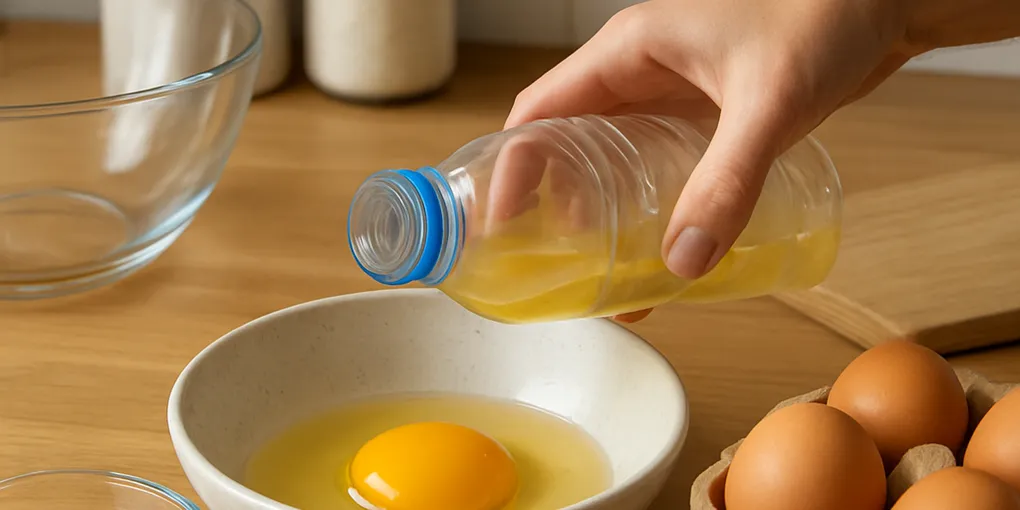
Separate Egg Yolks with a Plastic Bottle — Fast, Clean, No Tools
Overview
This is a tiny, wildly effective hack: use an empty, clean plastic water bottle to pick up egg yolks from a bowl or pan. It’s faster and less messy than fiddling with shells, egg separators, or your hands — ideal for baking, making mayonnaise, or prepping multiple yolks.
What you need
Tools and supplies
- One empty, clean plastic water or soda bottle (250–500 ml works best)
- Bowl or shallow dish with the cracked egg(s)
- Paper towel or dishcloth for quick cleanup
Food-safety note
- Use a bottle that’s been washed in hot, soapy water and rinsed well.
- Avoid contact between the bottle mouth and any ready-to-eat foods you won’t cook, or wash the bottle again if reused.
- Handle raw eggs with usual care — wash hands and surfaces afterward.
Step-by-step: Separate a single yolk
- Crack the egg into a shallow bowl or dish so the yolk sits undisturbed.
- Squeeze the empty plastic bottle gently to expel some air — about one quarter of its volume.
- Hold the bottle mouth a few millimetres above the yolk and slowly release your squeeze so the bottle creates a gentle suction and pulls the yolk into the bottle.
- Lift the bottle with the yolk inside, moving it over another bowl or container.
- Squeeze the bottle again to release the yolk into the receiving bowl.
Step-by-step: Separate multiple yolks quickly
- Crack each egg into a shallow tray or rimmed baking sheet, spacing yolks slightly apart.
- Use the same squeeze-suck-release motion to pick up yolks one after another.
- If the bottle collects any white and you need only yolks, squeeze the yolk into the receiving bowl and discard or save the whites separately.
Tips & variations
For fragile yolks
- Use a softer, smaller bottle — it creates gentler suction and reduces the chance of breaking the yolk.
For very fresh eggs (firmer whites)
- Crack eggs into a shallow dish so you can get the bottle mouth closer to the yolk with minimal white interference.
For icing, custards, or mayonnaise
- Rinse and sanitize the bottle before use to avoid off-flavors or contamination.
Quick cleanup
- Wash the bottle immediately if you intend to reuse it for food. Otherwise recycle it.
Why this works
Squeezing the bottle forces air out; releasing the squeeze creates a low-pressure pocket inside the bottle that draws the softer, slightly convex yolk up by suction. The yolk’s surface tension keeps it intact inside the bottle so you can transfer it cleanly.
Common pitfalls and fixes
- Bottle won’t pick up the yolk: Squeeze more air out first and bring the mouth closer to the yolk.
- Yolk breaks when picked up: Use a softer bottle, squeeze less, or try a smaller bottle mouth.
- Too much egg white comes with the yolk: Crack eggs into a wider, shallow dish so whites spread thinner and are easier to leave behind.
Final notes
This trick is fast, almost zero-waste, and requires only an empty bottle you probably have on hand. It’s especially handy when you need a few yolks for a recipe and want to avoid shell bits or messy hands.