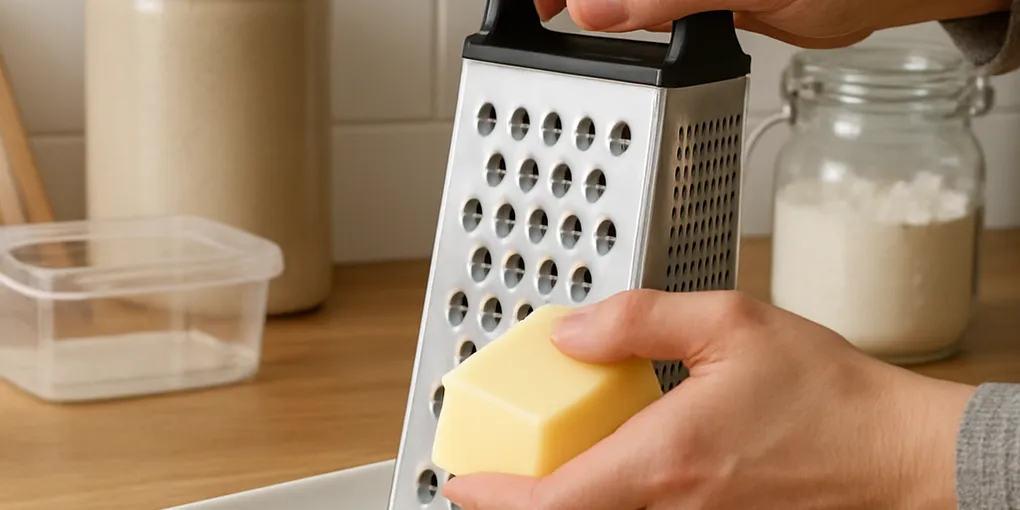
Speed‑Soften Butter with a Box Grater for Perfect Baking
The hack — grate your butter, don’t microwave it
If a recipe calls for room‑temperature butter and you forgot to take it out, don’t microwave. Use a box grater (or the large holes on a handheld grater) to turn a cold stick into thin shreds that soften almost immediately and incorporate far better into batters and doughs.
Why this works
- Grating increases surface area dramatically, so the butter absorbs ambient heat and reaches workable softness much faster.
- Shredded butter mixes evenly into sugar or flour without melting, which is ideal for creaming, biscuits, scones, and pie crusts.
- For laminated or flaky pastry, grated cold butter can be raked into flour and then briefly chilled to restore firmness — giving you better layering without overworking.
When to use it
- Soften a stick for spreading on toast in about 2–4 minutes.
- Make creamed butter and sugar for cakes in 5–10 minutes.
- Prepare cold butter for pastry or biscuits so it remains cold but easy to distribute.
Step‑by‑step: quick soften for spreading or creaming
- Chill the butter briefly if it’s very soft — you want a firm stick for clean grating.
- Place the largest holes of a clean box grater over a plate or cutting board. Stabilize the grater by holding it with your non‑dominant hand.
- Run the butter stick down the large holes with steady pressure, producing thin shreds. Rotate the stick as needed.
- For spreading: scrape shreds into a small bowl and let sit at room temperature 2–4 minutes, then press into shape with a spoon or knife.
- For creaming: add the butter shreds directly to the bowl with sugar. Cream briefly — the increased surface area speeds up incorporation.
Step‑by‑step: prep cold butter for flaky pastry or biscuits
- Keep the stick cold — work straight from the fridge.
- Grate the butter over a bowl so shreds fall free.
- Sprinkle the grated butter over the dry ingredients and use a pastry cutter, fork, or your fingertips to distribute. The shreds will stay cool and create pockets of butter that produce flakes.
- If the mixture warms slightly while handling, pop it into the fridge or freezer for 5–10 minutes to firm up before baking.
Tips and variations
- If you need many sticks grated ahead of time, grate them, spread in a single layer on a baking sheet lined with parchment, flash‑freeze 15–20 minutes, then transfer to zipper bags. Use frozen shreds straight into doughs.
- For ultra‑fast spreadability, grate and mix with a teaspoon of milk or cream per stick, then let sit 1–2 minutes.
- Use a microplane for very softening shavings (good for quick spreading), but stick to the large holes for pastry work so pieces remain substantial.
- Clean the grater immediately — butter clogs the holes if left to sit.
Safety and cleanup
- Hold the grater steady and keep fingers clear of the holes. A short downward pressure gives the cleanest shreds.
- Warm water and a brush remove trapped shavings quickly. A quick freeze of the grater for 5 minutes can make stubborn clumps brittle and easy to knock out.
This simple move saves time, improves texture, and avoids the uneven melting microwaving often causes. Grate more control into your baking — literally.