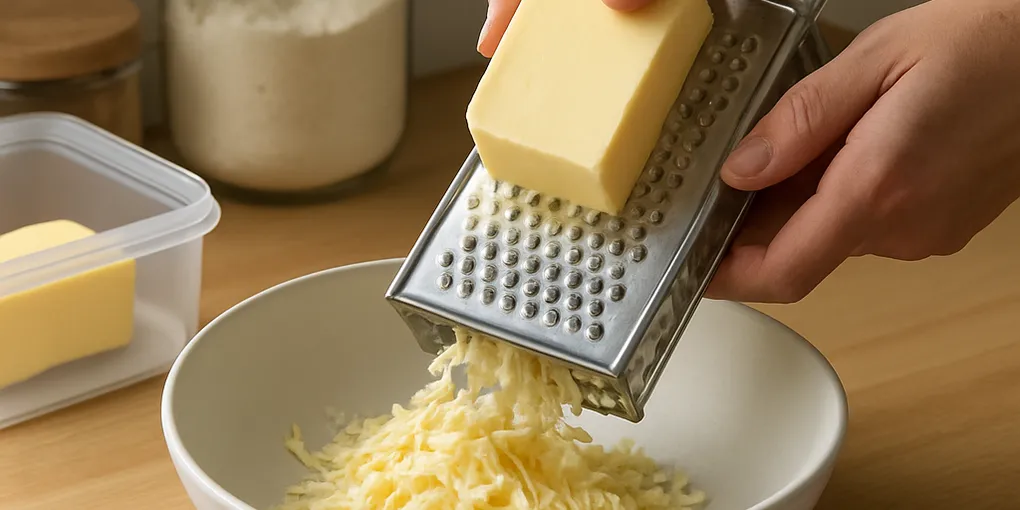
Grate Your Butter for Instant Flaky Pastry
Why this hack works
Grating cold butter creates lots of tiny, evenly distributed pieces that stay cold and separate in the dough. Those pieces melt in the oven to create steam pockets — the exact thing that makes crusts and biscuits flaky. Grating is faster than rubbing, gentler than a food processor, and requires no special tools.
What you need
- Box grater (large-holed side) or a coarse grater
- Cold unsalted butter
- Bowl and spoon or your hands
- Flour, salt and ice water (for the dough recipe you’re using)
- Baking sheet or plate to catch grated butter
Quick step-by-step for a double-crust 9” pie (example)
Ingredients (approximate)
- 2 1/2 cups (320 g) all-purpose flour
- 1 tsp salt
- 1 cup (226 g, 2 sticks) unsalted butter, very cold
- 1/4–1/2 cup ice water
Step 1 — Chill the butter
- Cut butter into sticks if packaged, then refrigerate until very cold. If you’re short on time, freeze 15–20 minutes until firm but not rock-hard. Cold makes grating clean and quick.
Step 2 — Grate the butter
- Hold the box grater in one hand over a bowl or plate.
- Using the large-hole side, grate the cold butter directly into the flour bowl or onto a plate.
- Aim for a mix of small shreds and a few pea-sized pieces — that texture is perfect.
Step 3 — Combine with dry ingredients
- Whisk flour and salt in a large bowl.
- Add the grated butter and toss with a spoon or your fingers until every shred is coated with flour. This helps keep pieces separate as you work.
Step 4 — Finish the dough
- Sprinkle ice water a tablespoon at a time and gently mix until the dough just comes together — don’t overwork.
- Gather into a disk, wrap, and chill 30–60 minutes before rolling. Chilling lets the butter re-firm and the gluten relax.
Tips for success
- Work quickly and keep everything cold. If butter starts to warm, pop the bowl in the fridge for 10–15 minutes.
- Use a vegetable peeler to shave thin ribbons as an alternative; freeze the ribbons briefly so they don’t smudge into paste.
- If you don’t have a grater, freeze the butter solid and pulse quickly in a food processor — but don’t over-process.
- Leftover grated butter freezes beautifully in a flattened zip bag — great for next time.
- Use the same technique for biscuits, scones and shortcrust tarts. Reduce mixing time with biscuits for taller, flakier layers.
Short troubleshooting guide
- Dough too greasy or tough: you overworked it; chill and try to handle less next time.
- Dough not flaky after baking: butter was too warm while mixing — re-chill and remake.
- Grater clogging: butter too soft; chill 10–15 minutes and try again.
Final note
Grating butter saves time, produces more consistent flakiness than rubbing and is simple enough to become your go-to for pastry and quick breads. Try it once and you’ll notice the lift.