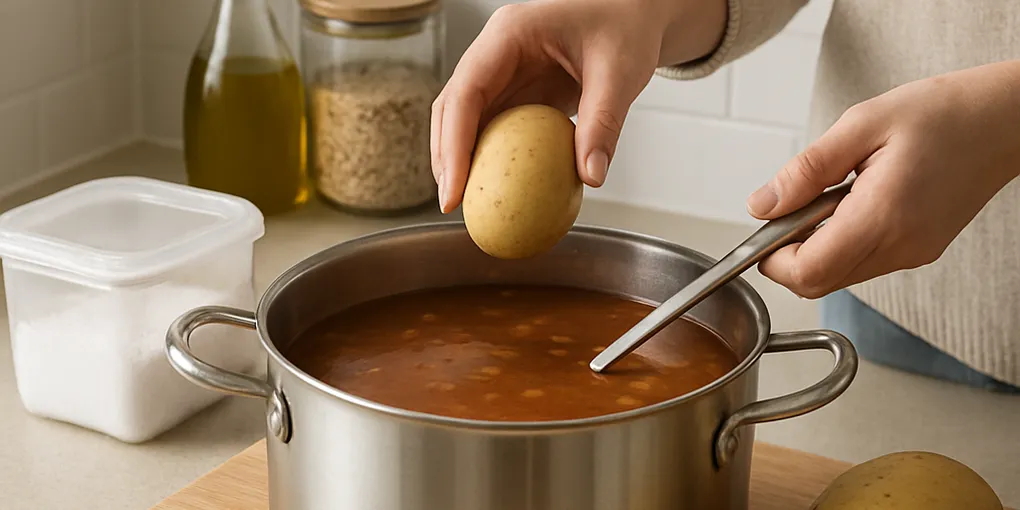
Rescue an Oversalted Soup with a Potato — Fast and Simple
Why this works
A raw, peeled potato acts like a mild sponge for dissolved salt and other concentrated flavors. As it simmers in the broth it absorbs some of the salty liquid and diffuses salt into itself, lowering the soup’s salt concentration enough to make it palatable. This is a quick, low-effort rescue for moderately oversalted soups, stews and stocks.
Materials you’ll need
- 1–2 medium potatoes (Russet, Yukon Gold, or similar)
- A sharp knife and peeler
- A spoon for tasting
- A small pot or ladle (optional, if you want to taste from a separate bowl)
Step-by-step rescue method
- Taste the soup to confirm it’s oversalted.
- Peel 1 medium potato. If the pot is large or the soup is very salty, use 2 potatoes.
- Cut the potato in half or into large chunks so it sinks easily and exposes more surface area.
- Add the potato pieces directly to the simmering soup.
- Keep the soup at a gentle simmer for 10–20 minutes. Stir occasionally.
- Remove the potato pieces and taste the soup.
- If it’s still too salty, repeat with another peeled potato or try one of the alternate fixes below.
- Discard the potato pieces (they’ll be very salty) or taste one first—if it has absorbed a lot of salt, don’t eat it straight.
When to use this — and when not to
- Use for: broths, clear soups, stews, bean dishes, and sauces that are moderately oversalted.
- Not ideal for: delicate sauces, sauces thickened with starch that will break down with extra simmering, or dishes that are extremely oversalted — heavy dilution may be necessary instead.
Quick alternatives and complements
- Dilute: Add unsalted stock, water, or unsalted pureed vegetables and simmer briefly to integrate.
- Add bulk: For stew or chowder, add extra vegetables, beans or grains to absorb and spread out the salt.
- Add balancing elements: A splash of acid (vinegar or lemon) or a tiny pinch of sugar can balance perceived saltiness—use sparingly.
Pro tips from a professional organizer
- Keep a couple of extra potatoes on hand in your pantry for emergency fixes—potatoes are shelf-stable and multi-use.
- If you often oversalt, try seasoning gradually and tasting at intervals rather than adding a big pinch at once.
- Label your “rescue” potatoes if you remove them from the pot to avoid accidentally serving them directly—they’ll be salt-soaked.
The science in one sentence
Potatoes absorb some of the salty liquid and dilute the remaining broth; they don’t remove chemically bound sodium, but they reduce the taste impact enough to save many dishes.