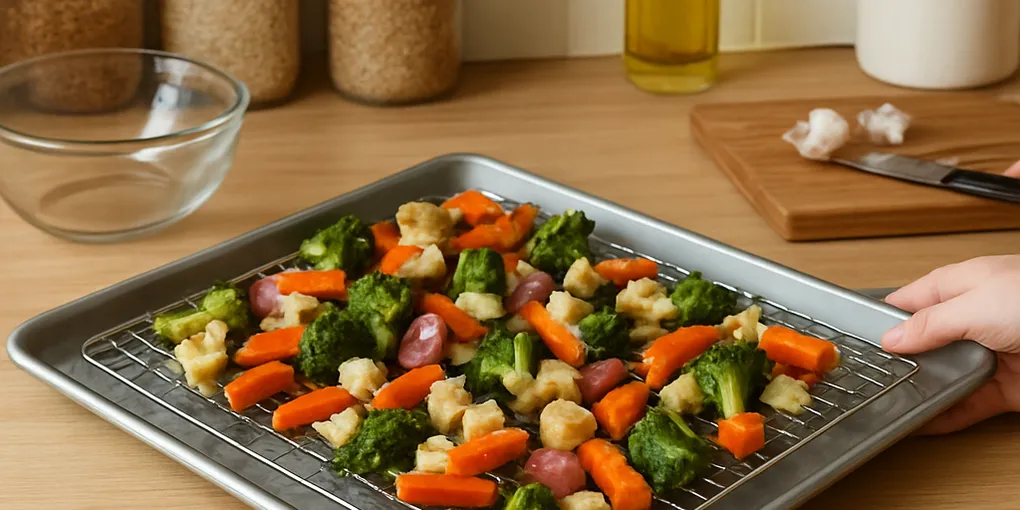
Crispier Roasted Veggies — Invert Cooling Racks on a Hot Sheet
Why this hack works
Roasting vegetables becomes crispier when hot air circulates all around each piece and the surface touching the pan gets immediate high heat. A preheated baking sheet provides intense, even radiant heat, and placing vegetables on inverted cooling racks elevates them so air can circulate underneath. The result — edges that caramelize and bottoms that don’t steam.
What you need
- 1 rimmed baking sheet (quarter‑ or half‑sheet)
- 1 or 2 small metal cooling racks that fit inside or on top of the sheet (ensure they’re oven‑safe)
- Vegetables cut into uniform pieces
- High‑smoke‑point oil (olive, avocado, or grapeseed)
- Salt, pepper, and any seasonings
Step‑by‑step instructions
1. Prep and preheat
- Preheat your oven to 425°F–450°F (220°C–230°C). For dense roots like carrots or parsnips use 425°F; for quick‑roast veg like asparagus use 450°F.
- Place the empty rimmed baking sheet on the middle rack while the oven heats.
2. Oil and season the vegetables
- Cut vegetables to uniform thickness so cooking time is even.
- Toss with just enough oil to lightly coat — too much oil promotes steaming. Add salt and your chosen seasonings.
3. Arrange on inverted cooling racks
- Set one or two oven‑safe cooling racks inside the preheated sheet. If the rack’s feet keep it too high, invert the rack so the flat grid sits above the pan and the feet sit on the pan rim — this lifts the veg and creates airflow underneath.
- Spread the vegetables in a single layer on the rack. Don’t crowd — leave space so air circulates.
4. Roast and monitor
- Slide the hot sheet with racks into the oven. Roast times will depend on the veg:
- Thin asparagus or green beans — 8–12 minutes
- Broccoli or cauliflower florets — 12–20 minutes
- Root vegetables (carrots, parsnips, beets) — 20–35 minutes
- Check at the shorter end of the range, then every 5 minutes. Rotate the sheet if your oven has hot spots. Remove when edges are browned and a knife pierces easily.
5. Finish and serve
- Transfer roasted vegetables to a serving dish immediately to avoid steam building under them on the pan.
- Optionally finish with a squeeze of lemon, a drizzle of extra virgin olive oil, fresh herbs, or a sprinkle of flaky salt.
Tips, variations and troubleshooting
Tips for best results
- Use metal racks — silicone or plastic isn’t oven‑safe at high heat.
- Preheating the sheet is the single most important step for crisp bottoms.
- Don’t over‑oil; aim for a sheen rather than pools of oil.
- If your cooling rack doesn’t fit inside the sheet, set it directly on the oven rack over the preheated sheet beneath to catch drips.
Flavor variations
- Mediterranean — toss with garlic powder, oregano, and lemon zest after roasting.
- Asian — toss with sesame oil and toasted sesame seeds right after roasting.
- Smoky — use smoked paprika or a quick brush of miso glaze in the last 3 minutes.
Troubleshooting
- Veg steaming instead of browning: Too crowded or too much oil. Spread into another sheet or reduce oil.
- Bottoms burning: Rack sitting too close to pan rim or oven temp too high — lower temperature 25°F and check position.
Safety and cleanup
- Use oven mitts when handling a preheated sheet and rack — metal gets very hot.
- Allow racks and sheet to cool slightly before washing. Soak briefly in warm soapy water to loosen caramelized bits for easier cleaning.
Why you’ll love it
This hack turns simple oven roasting into a low‑effort way to get crisp, deeply caramelized vegetables without flipping constantly, without specialized equipment, and using tools most kitchens already have. Perfect for weeknight sides and meal‑prep batches that reheat beautifully.