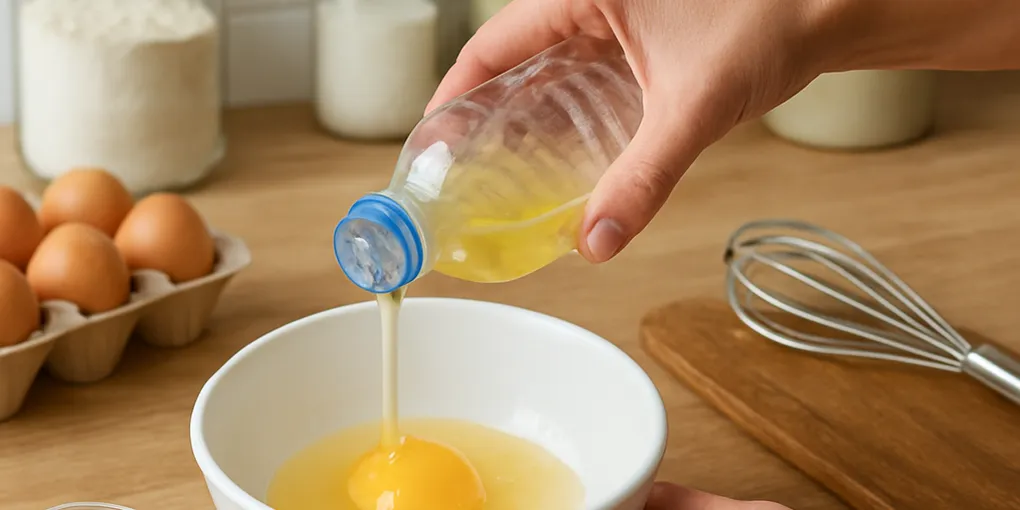
Perfect Egg Separation with a Plastic-Bottle Suck Trick
Why this hack works
A clean, empty PET bottle creates a gentle vacuum when you squeeze and release it. The suction pulls a whole yolk into the neck without tearing the membrane, leaving the white behind. It’s faster and cleaner than using your hands or passing yolks back and forth between shell halves, and it eliminates shell shards in the bowl.
What you need
Materials
- 1 clean, empty plastic water or soda bottle (500–750 ml works best)
- Eggs (cold for separation; room temperature later if recipe calls for it)
- 1 bowl for whites, 1 bowl for yolks (or separate into a single prep bowl)
Prep
- Wash the bottle with hot, soapy water and rinse well; let it air-dry or wipe with a clean towel.
- Chill your eggs in the fridge until you’re ready to separate.
Step‑by‑step: separate one egg in 4 easy moves
1. Crack the egg into a shallow bowl
Crack the egg on a flat surface and open it into a shallow bowl so the yolk sits visible and unbroken.
2. Squeeze the bottle
Hold the clean bottle slightly above the egg and gently squeeze the sides to push out a little air.
3. Place the bottle mouth over the yolk and release
Set the bottle opening over the yolk and slowly release your squeeze. The yolk will be sucked into the bottle while the white stays in the bowl.
4. Transfer the yolk
Move the bottle over a separate bowl for yolks, squeeze again to release the yolk, and repeat for additional eggs.
Tips for best results
- Use cold eggs — yolks are firmer and less likely to break. If your recipe requires room‑temperature eggs, separate them cold first, then let them sit until they warm up.
- Don’t touch the yolk with the bottle if you plan to reuse the bottle without washing; always clean the bottle between sessions to avoid cross‑contamination.
- If a yolk breaks, use a slotted spoon to lift stray membrane pieces, or discard and start with a fresh egg if the white is contaminated.
- For multiple eggs, crack each egg into its own small bowl before separating — this prevents one bad egg from spoiling the whole batch.
Troubleshooting
- Yolk not sucking up? Make sure you squeezed enough air out, and position the bottle directly above the yolk so suction is centered.
- Yolk breaks when lifted? Squeeze less — strong suction can deform and burst the membrane. Use a wider‑neck bottle for gentler grip.
- Whites pulled up too? Tilt the bowl slightly so yolk sits higher than the white, then position bottle neck snugly around the yolk.
Variations & uses
- Use this trick for recipes that need just yolks (custards, mayo, crème brûlée) or just whites (meringue, angel food cake).
- To separate many eggs quickly, have two bowls side by side and a second clean bottle ready so one can be sanitized while you use the other.
Clean‑up and food safety
- Wash the bottle thoroughly in hot, soapy water after each use; sanitize with boiling water if you plan to reuse it for food tasks.
- Always wash hands and work surfaces after handling raw eggs. Keep separated whites and yolks refrigerated if not using immediately.
Why you’ll love it
This method is fast, reduces mess, avoids shell bits, and is perfectly repeatable using items you already have in the kitchen. Once you try it, separating eggs becomes a five‑second, stress‑free step in any recipe.