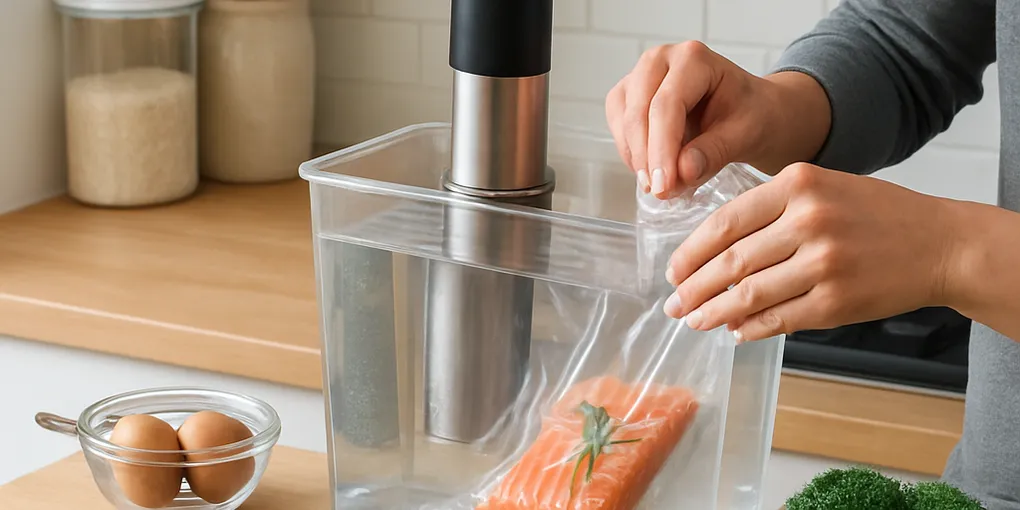
Thermos Sous‑Vide: Cook Perfect Eggs, Fish and Veggies Without a Machine
What this hack does and why it’s brilliant
Turn a high‑quality insulated thermos into a mini sous‑vide cooker. It holds water at a stable temperature long enough to gently and evenly cook eggs, delicate fish, and many vegetables — without an immersion circulator, extra electricity, or a bulky setup. Great for travel, office lunches, dorms, or quick low‑fuss prep at home.
What you need
- A good vacuum‑insulated thermos (500–1000 ml works well)
- A digital instant‑read thermometer (preferably waterproof)
- Food‑grade zip‑top bags or resealable vacuum bags (double‑bag if needed)
- Tongs or a spoon to place/remove food
- Optional: vacuum sealer or straw to remove most air from a zip bag
Safety first
- Use fresh, high‑quality ingredients. If you’re cooking poultry or pork, use temperatures and times that ensure pasteurization — see chart below and err on the conservative side.
- Always verify the water temperature before you seal the thermos and again if precision matters.
- Don’t re‑use bags that touched raw meat without washing them first.
- If you’re unsure about internal doneness for food that must be fully cooked (chicken, pork), use a thermometer on the finished food.
Step‑by‑step: How to use a thermos as a sous‑vide
1. Preheat the thermos
- Boil water.
- Fill the thermos with boiling water and screw the lid on. Let sit for 3–5 minutes to preheat the interior.
- Empty the thermos.
Preheating minimizes temperature drop when you add your cooking water.
2. Prepare the cooking water to target temperature
- Bring a kettle to a boil, then pour into a heatproof container and let cool until it reaches the target temperature (use the thermometer to check).
- Target temp depends on recipe (see chart). For most delicate proteins you’ll want 50–65°C (122–149°F). For some veg you’ll need higher temperatures and the thermos may not hold them as long.
Tip: If you don’t want to wait for cooling, pour boiling water into the thermos and monitor with your thermometer; a quality thermos typically settles in the 60–80°C range after a few minutes.
3. Bag the food
- Season the food as desired. For fish or chicken, add a small pat of butter or oil and aromatics if liked.
- Place food into a zip‑top or vacuum bag. Remove as much air as possible (vacuum sealer is best; for zip bags, press out air or use the straw method).
- Double‑bag fragile items or if you’re worried about leaks.
4. Fill the thermos with cooking water and add the bag
- Pour the water at the target temperature into the preheated thermos.
- Submerge the sealed bag, using a spoon or tongs, making sure the food is covered by water. If the bag floats, clip it to the thermos mouth with a small chip clip or weigh it down with a clean stainless spoon.
- Close the lid tightly.
5. Wait the required time
Leave the sealed thermos undisturbed for the time indicated for the recipe. Resist opening — every time you open it you lose heat.
6. Remove and finish
- Carefully take out the bag. Open and test for doneness.
- For fish or meat you may want a quick sear in a hot pan for color — 30–60 seconds per side.
- Serve immediately.
Quick reference temperature/time chart (approximate)
Use the lower end of time ranges for thin cuts or small portions; use the higher end for thicker pieces or extra safety.
- Eggs (in shell)
- 63°C – 45–60 minutes — jammy, silky yolk and set whites
- 70°C – 15–20 minutes — firm whites, custardy yolk
- Salmon (fillet, vacuum sealed)
- 50°C – 20–30 minutes — very silky, almost raw texture
- 55°C – 20–30 minutes — flakier, still moist
- Chicken breast (vacuum sealed)
- 60°C – 45–75 minutes — moist, fully cooked (longer times increase pasteurization safety)
- 65°C – 45–60 minutes — firmer texture, still juicy
- Firm vegetables (carrots, beets, potatoes, sliced thin)
- 80–85°C – 20–40 minutes (thermos may cool too fast; best for short holds or preheated thermos)
- Tender vegetables (asparagus, green beans)
- 85°C – 8–12 minutes (thin pieces) — quick blanch under higher temp then cool
Note: Many home thermoses hold heat well enough to maintain 60–70°C for 45–90 minutes. If you need higher temps for long times, a proper sous‑vide cooker is safer.
Example recipes
Jammy thermos egg (single egg)
- Preheat thermos; heat water to 63°C.
- Place 1–2 room‑temp eggs (in shell) into a zip bag or directly into water (in‑shell is fine).
- Fill thermos with 63°C water, close lid, wait 45 minutes.
- Remove eggs, crack open — run under cold water for 30 seconds if you want to stop carryover cooking.
Silky salmon fillet
- Season a 120–180 g salmon fillet, place in zip bag with a drop of oil and dill.
- Remove air and seal.
- Preheat thermos, fill with 50–55°C water, add bag, close, wait 25–30 minutes.
- Remove and serve or quick sear skin side 30 seconds.
Tender green beans
- Trim beans and place in bag with a pinch of salt and 1 tsp butter.
- Remove air and seal.
- Fill thermos with ~85°C water (best to monitor initial temp; keep time short), add bag, close, wait 8–12 minutes.
- Remove and shock in ice water if you want to preserve bright green color for salads.
Final tips and troubleshooting
- Use a good quality thermos; cheap ones lose heat quickly and reduce reliability.
- Test your thermos with just water and a thermometer to learn how long it holds a given temp — that helps you plan times.
- For multiple portions, use a larger thermos or several smaller ones so heat enclosure is efficient.
- If the bag floats and you can’t clip it, fold a clean kitchen towel and set the bag beneath the towel inside the thermos to keep it submerged.
- If precision matters (e.g., for food safety), use a proper sous‑vide device. This hack is brilliant for convenience, travel, and gentle cooking, but it’s a lower‑precision method.
Enjoy reliably tender eggs, silky fish and hands‑off cooking with a tool you already own.