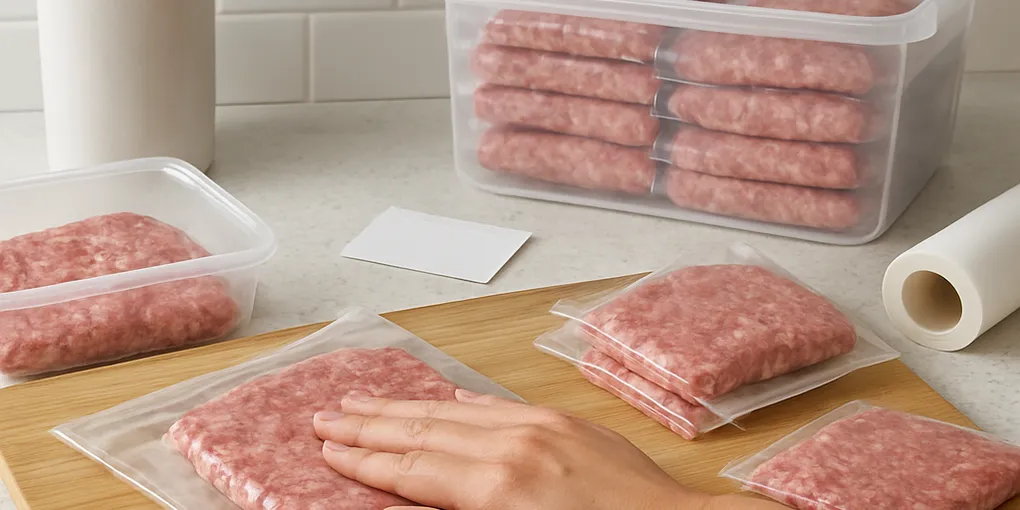
Flatten-and-Stack: Freeze Ground Meat into Fast‑Thaw Flat Packs
Why this hack is a game-changer
Flattening ground meat into thin, sealed packs turns bulky, slow‑thaw blocks into slim, stackable portions that:
- Freeze faster (less ice crystal damage → better texture).
- Stack neatly to save freezer space.
- Thaw dramatically faster — often minutes in cold water, or much shorter fridge time.
- Make portioning/meal prep effortless.
Use it for beef, pork, turkey, chicken, or plant-based grounds.
Tools and supplies
- Ground meat
- Parchment paper or freezer-safe plastic wrap (single‑use) or reusable silicone sheets
- Resealable freezer bags or vacuum bags
- Baking sheet or cutting board (flat surface)
- Rolling pin, heavy skillet, or your hands to flatten
- Permanent marker for labeling
Step‑by‑step: Make flat packs
1. Portion
Decide your portion sizes first (common options):
- 4–6 oz — single burger or taco portion
- 8–12 oz — family meal or meatloaf base
- 1 lb — bulk cooking
Divide meat into those portions.
2. Sandwich between sheets
- Lay a sheet of parchment or plastic on a flat surface.
- Place one portion of meat in the center.
- Cover with a second sheet.
3. Flatten
- Press down firmly with your hands, then roll with a rolling pin or press with a heavy skillet until the patty is uniform and about 1/2 inch (12 mm) thick. Thinner cooks and thaws faster; 1/2 inch is a great balance for handling.
- Repeat for all portions.
4. Stack and bag
- Stack the flattened portions with a little parchment between each to prevent sticking.
- Slide the stack into a resealable freezer bag or vacuum bag. For resealable bags press out as much air as possible before sealing — lay the bag flat and use your hands to push air toward the opening as you seal.
- If using vacuum sealing, remove all air to prevent freezer burn.
5. Label and freeze flat
- Label with contents, portion size, and date.
- Freeze the bag flat on a baking sheet for 4–6 hours (or until solid). Once frozen, you can stand the packs on end or stack them vertically to save space.
Thawing & cooking: fast options
Refrigerator (safest)
- Transfer from freezer to fridge. Thin packs thaw overnight or in ~12–18 hours depending on thickness and fridge temp. Cook within 1–2 days.
Cold‑water (fast and safe if sealed)
- Keep the pack sealed. Submerge in cold water in a bowl or sink, changing water every 30 minutes.
- A 1/2‑inch pack typically becomes flexible in 15–30 minutes and fully thawed in 30–60 minutes. Cook immediately after thawing.
Microwave (quickest)
- Use microwave defrost mode in short bursts, rotating and checking frequently to avoid partial cooking. Cook immediately after microwaving.
Direct cook from frozen
- For skillet or oven: you can cook directly from frozen — add a few extra minutes and break meat up as it softens.
Tips, variations, and safety
- For burgers: make patties slightly wider than your bun; freeze between parchment to preserve shape.
- For meatballs: press into a thin log, freeze, then slice and roll when semi‑thawed.
- For marinades: freeze meat with marinade in the pack — it thaws and marinates at once.
- Remove air to reduce freezer burn — vacuum sealing is ideal, but press‑out technique works well.
- Always keep meat sealed when using cold‑water thawing to avoid contamination.
- Label with date; use ground meat within 3–4 months for best quality.
Why it works (brief)
Thin pieces freeze faster so ice crystals are smaller, preserving texture and flavor. Faster thawing reduces time bacteria can grow at warm temperatures and gets you to the cooking stage sooner.
This tiny extra bit of prep saves freezer space, cuts thaw time dramatically, and makes weeknight dinners effortless.